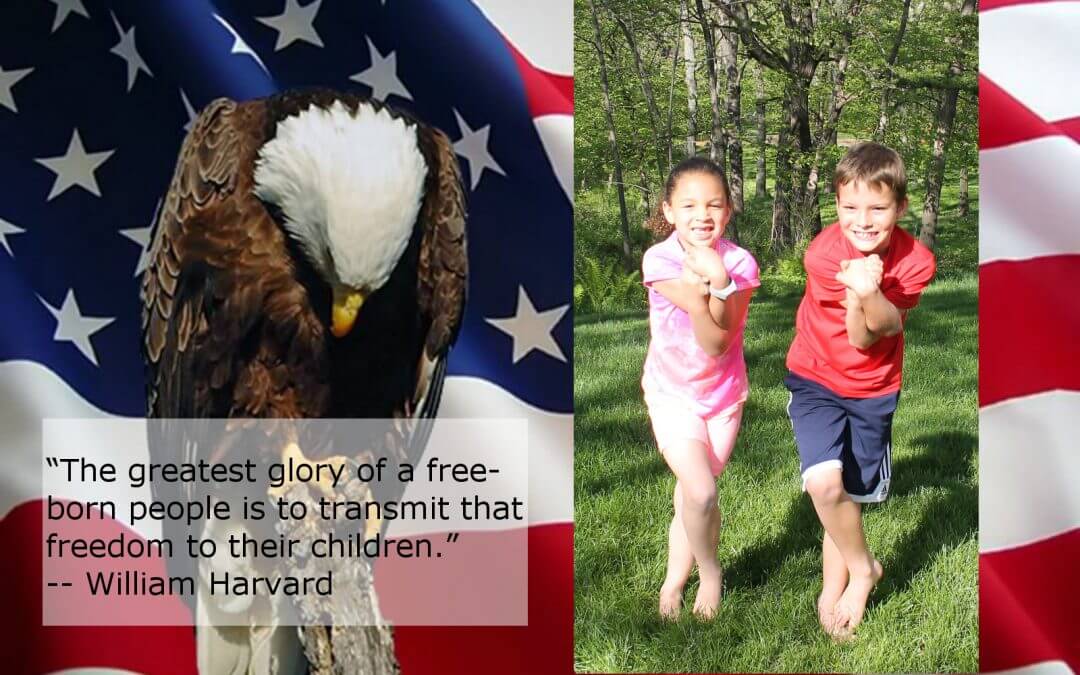
“The greatest glory of a free-born people is to transmit that freedom to their children” —William Harvard
There is no other symbol of our freedom than that of the American Eagle! Try practicing Eagle Pose with your kids. It is wonderful for balance, core strength and detoxing as you hold this twisty tricky pose.
How to Hold Eagle Pose
Begin in a standing position. Cross your right thigh over your left leg.
Try to tuck your right foot behind the calf of your left leg.
Bring your arms straight out in front of you, and then cross left arm over your right arm at the elbows.
Bend left arm at the elbow and bring palms of hands together. If palms do not touch, then have the backs of hands touch.
Bend your knees and hold your arms out in front of you with fingertips toward the sky.
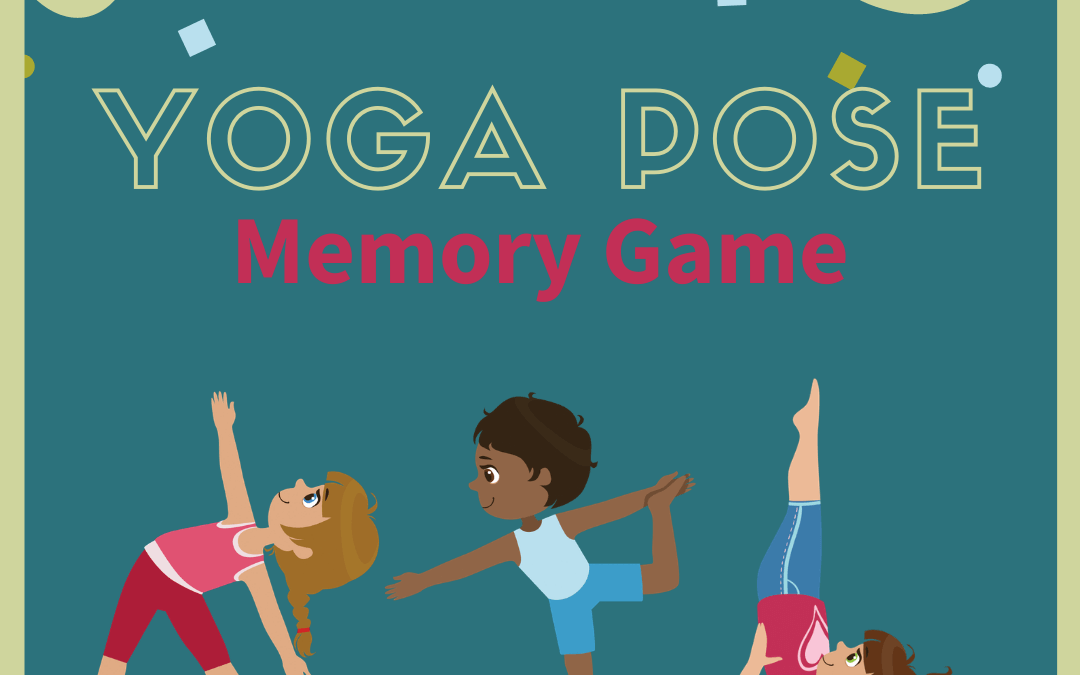
Stretch your body and your mind with Yoga Pose Memory! Help kids (and adults!) improve balance and flexibility while boosting matching and memory skills.
Learn and practice yoga poses as you search for matching yoga poses. Once a match is made, then the player must demonstrate that yoga pose. Once the cards have all been matched, the player with the most pairs performs all of the yoga poses in a sequence.
Learn and practice yoga poses with this fun and engaging Yoga Pose Game!
Congratulations! You have made it to the main part of your yoga class where you can introduce and teach poses to your students. Kids enjoy learning new yoga poses and often get excited about adding new ones to their repertoire.
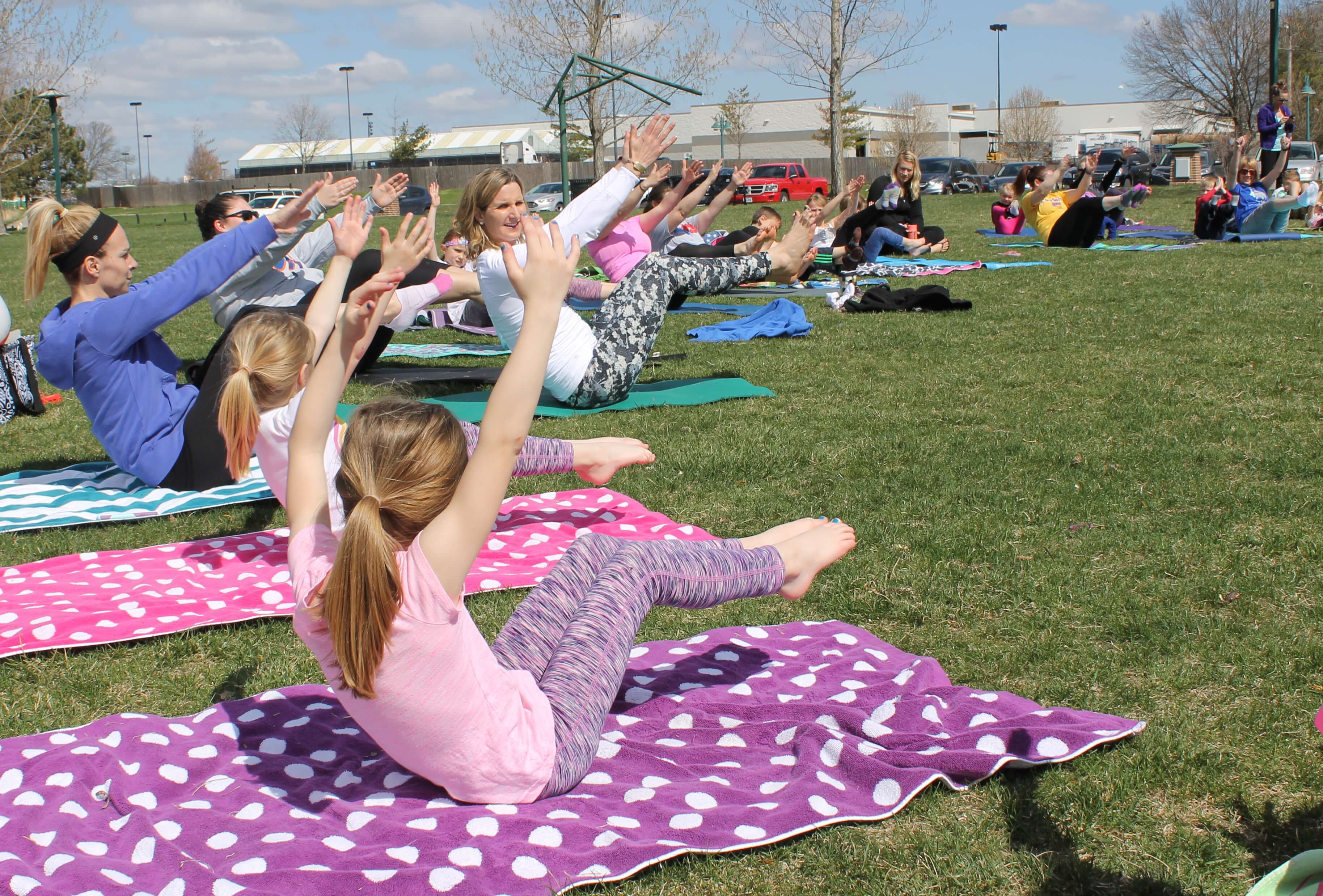
Boat Pose at the Park: Yoga is a Great Exercise for All Ages
How to Teach Yoga Poses to Kids
When teaching yoga poses to kids, I have found it helpful to group the yoga poses together by a theme. It is also helpful to only introduce 4-6 yoga poses per class. This really gives children the opportunity to practice the yoga poses and remember them outside of class.
I have found that concentrating on fewer poses in class allows the children to truly focus, pay more attention to correct form and achieve success. They will feel themselves getting stronger, longer and more flexible as they become more comfortable with the poses. Your theme-related yoga poses are also a great way to differentiate and accommodate for the varying needs of your class.
How to Introduce the Yoga Poses
When introducing the yoga poses, it is important to be excited about the poses and build anticipation. This is a great technique and you will have the kids in the palm of your hand and so excited to learn what the next pose will be.
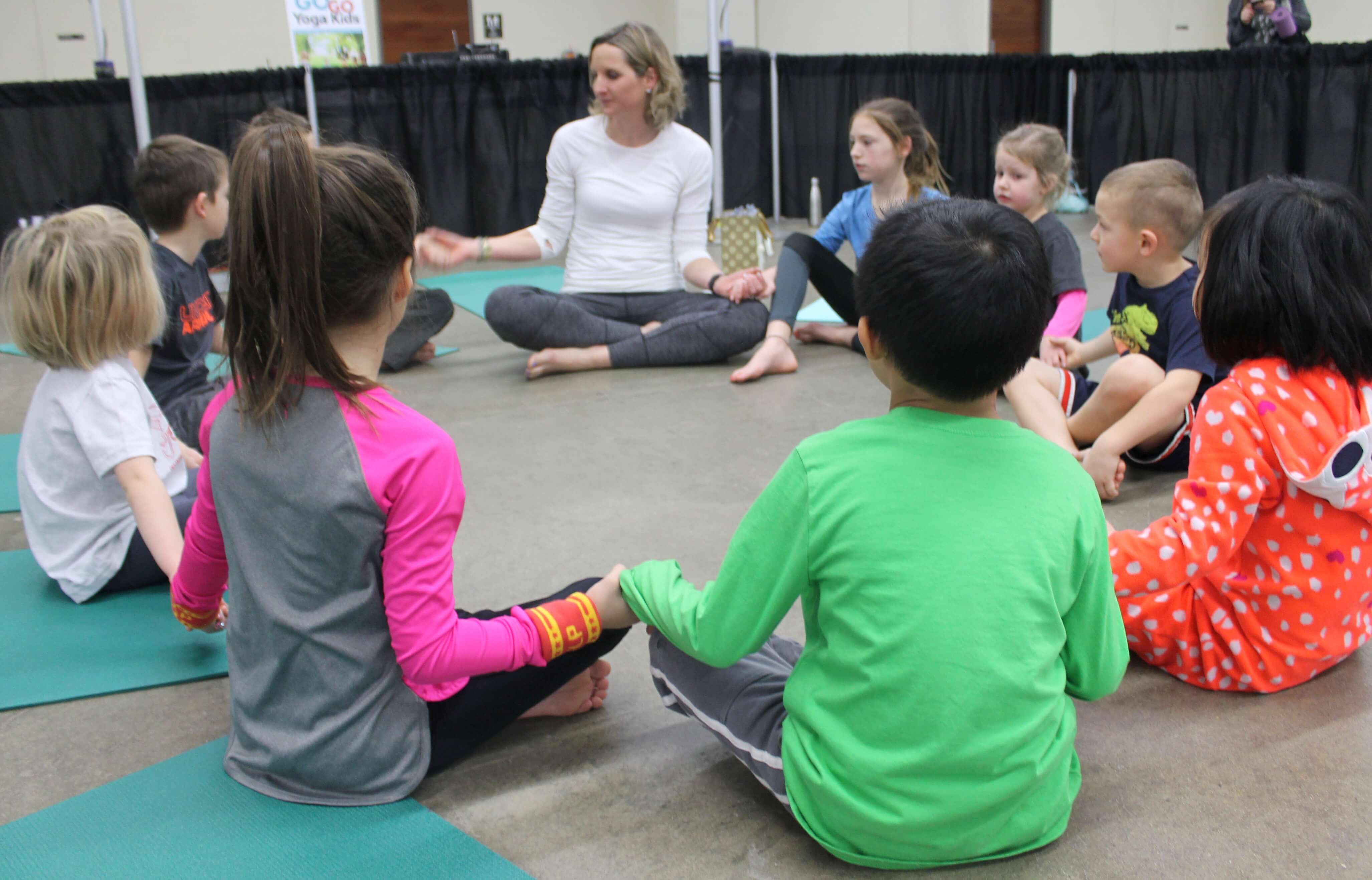
Gather the children in a circle
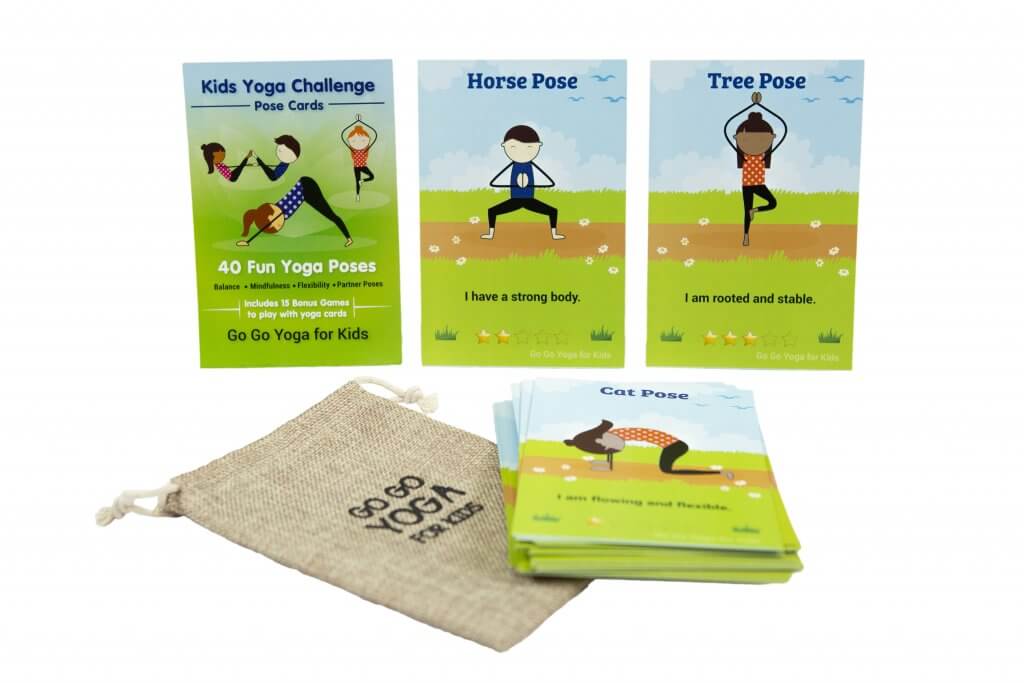
Have some sort of seasonal bag or prop (colorful gift bag, basket, stocking cap, sand pail) that you have placed the 4-5 pose card visuals. I use The Kids Yoga Challenge Pose Cards.
Call on a child to come and “draw out” the next pose.
Everyone practices the pose. Discuss what parts of your body you feel working and getting stronger.
Call on another child to draw out the next pose and practice.
Continue in this format until all of the poses have been drawn.
I like to give the students a “test.” Since I am a teacher they find this highly interesting and engaging. I call out a pose that we have learned and the students must get into it as quickly as they can. For younger ages, it is fine to show the Kids Yoga Pose Card to help them find success.
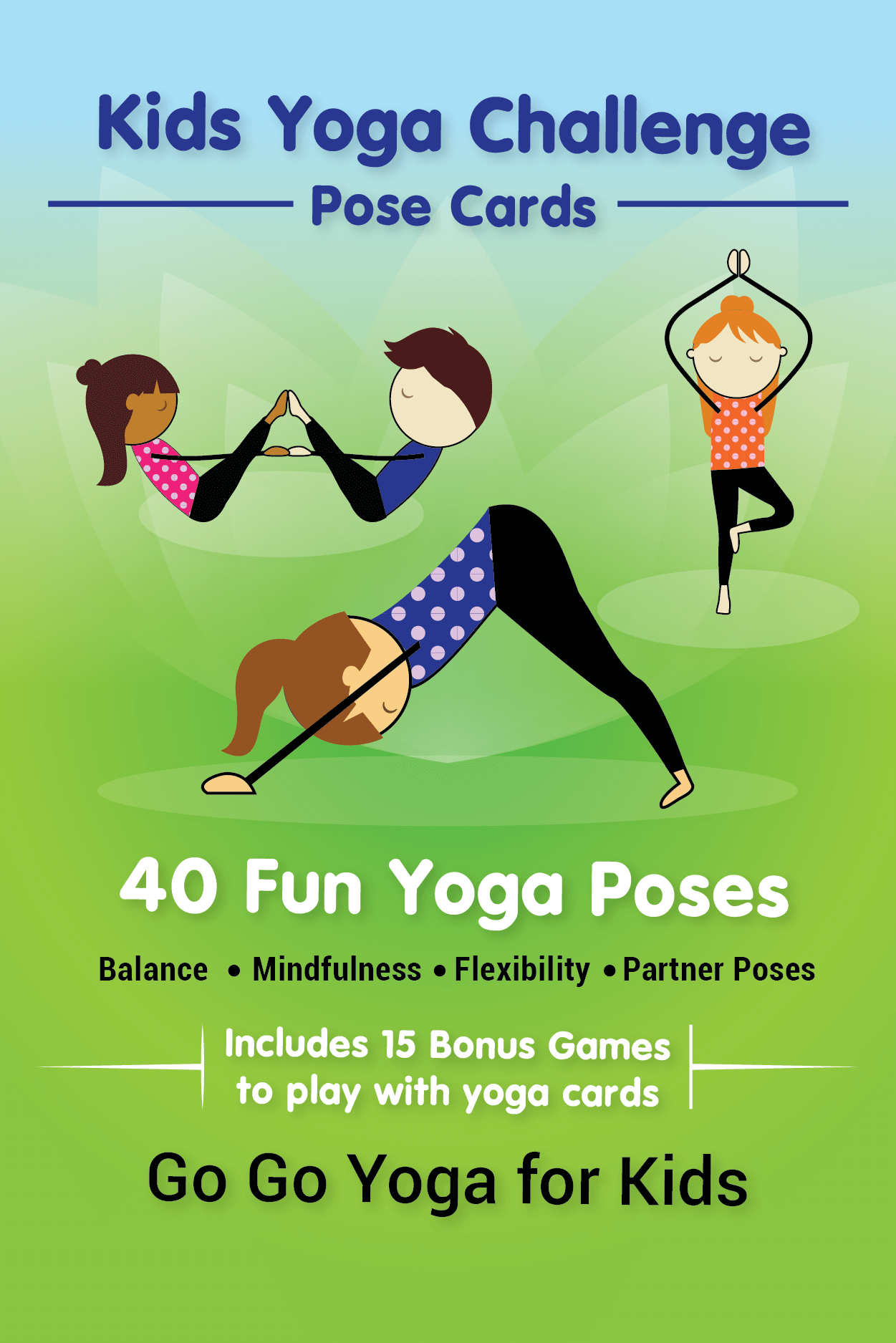
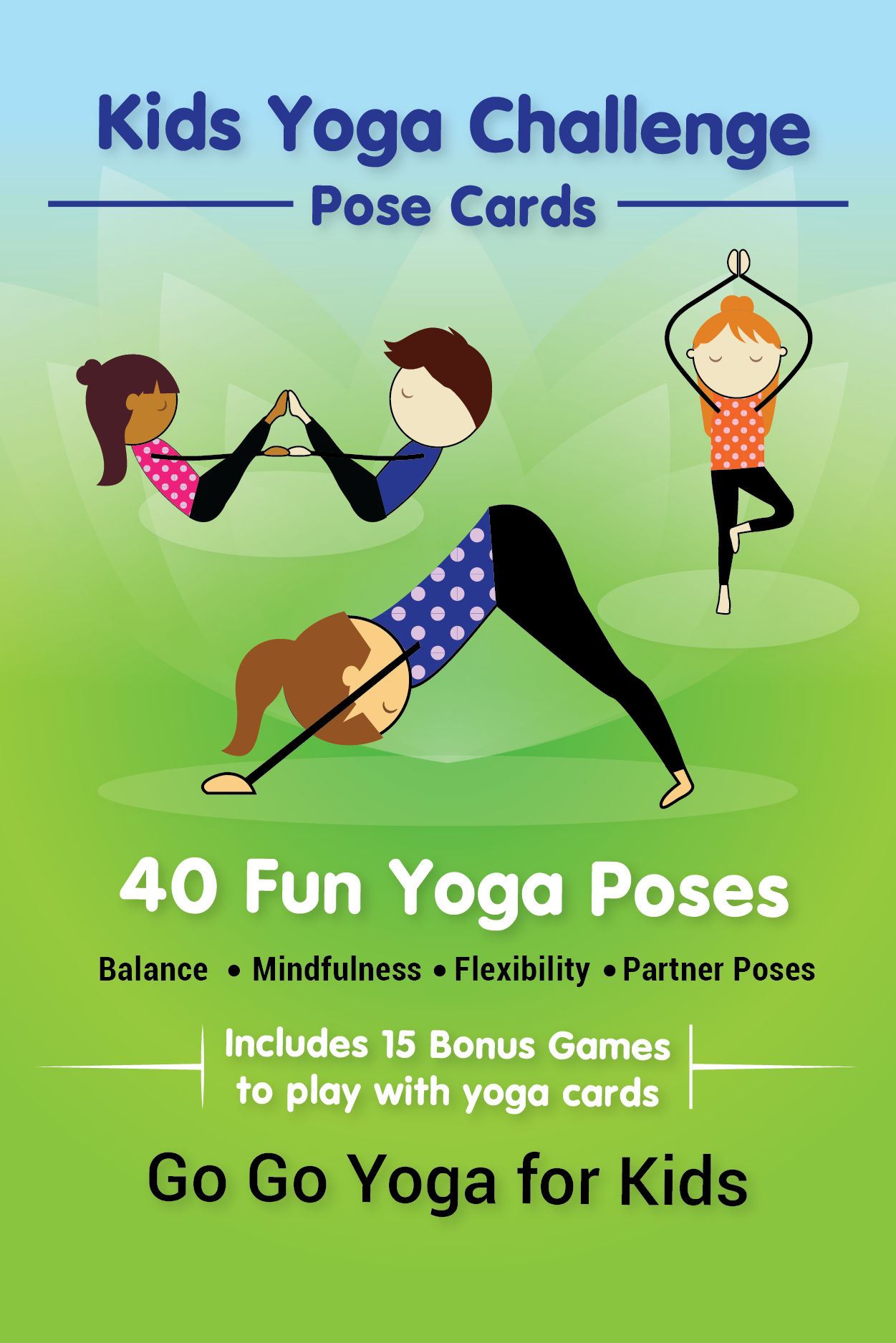
The Kids Yoga Challenge Pose Cards include 40 yoga pose cards. Partner yoga poses, yoga games, and mantras for mindfulness are included.
How to Teach Yoga Poses to School-Aged, Tweens, and Teens
After learning and practicing the yoga poses with older students, we will flow the poses together. Our yoga mats are already placed in a circle and I then place the yoga pose cards (that we just learned) in the center in the center in the circle and also order that we will flow. The children really enjoy this and they feel very grown-up.
They are definitely not too grown-up, however, when the Yoga Flow ends and it is time to practice the poses with a Yoga Game! Kids never ever want to pass up a yoga game!
Stay tuned for our favorite Kids Yoga Games in our Kids Yoga Lesson Planning 101 coming up next!
As a thank you for sharing your time and thoughts, I will then send you a FREE coupon code for our Kids Yoga Challenge App.
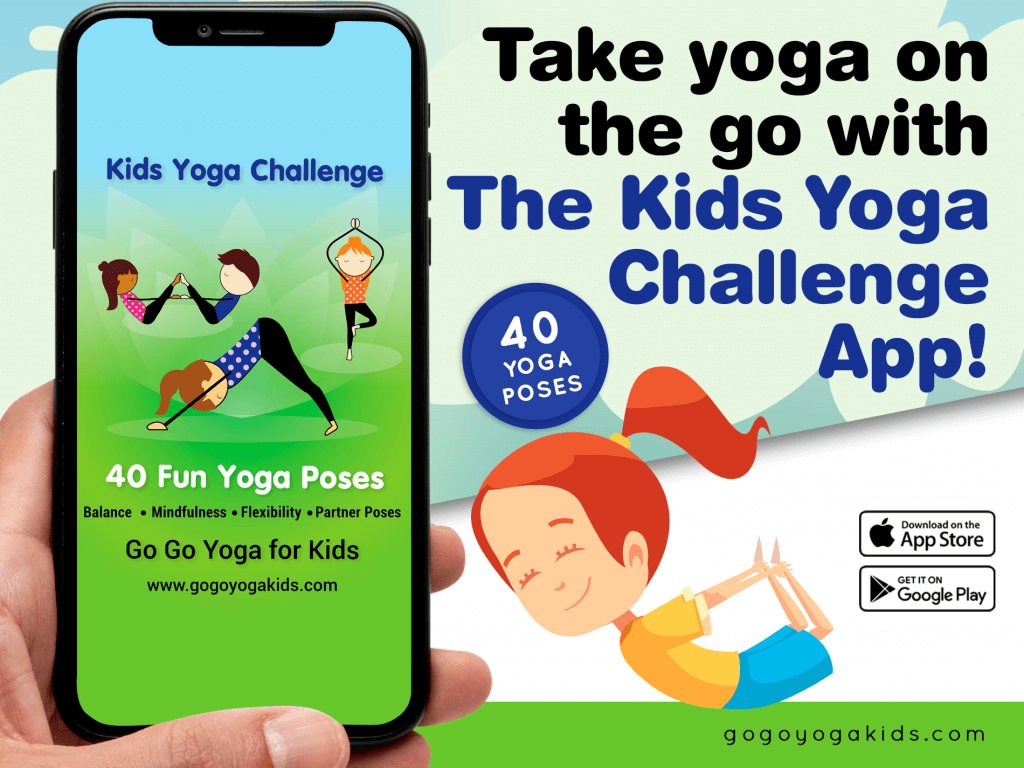
The Kids Yoga Challenge App is perfect for taking your yoga on the go! The Kids Yoga Challenge App will challenge kids with balance, flexibility, mindfulness, and more. This app includes 40 yoga pose cards including partner poses, confidence-building poses, and mantras.
Thank you for all of your support! I look forward to hearing from you and seeing you inside the free kids yoga app.
Take Yoga on the Go with the Kids Yoga Challenge App
The Kids Yoga Challenge App Includes:
40 progressive yoga poses including partner poses
Empowering pose mantras for beginners and meditation
Perfect for all levels
Poses rated from 1-5 stars based on difficulty
Easy to follow illustrated and colorful yoga poses
Tested and proven yoga poses to achieve mental and physical benefits
Takes only minutes each day to gain lifelong skills and health
Welcome to Our Kids Yoga Lesson Planning 101 Training. Congratulations! You have made it to the end of your Kids Yoga Class. No worries, if you are just joining us. You can get all caught up here.
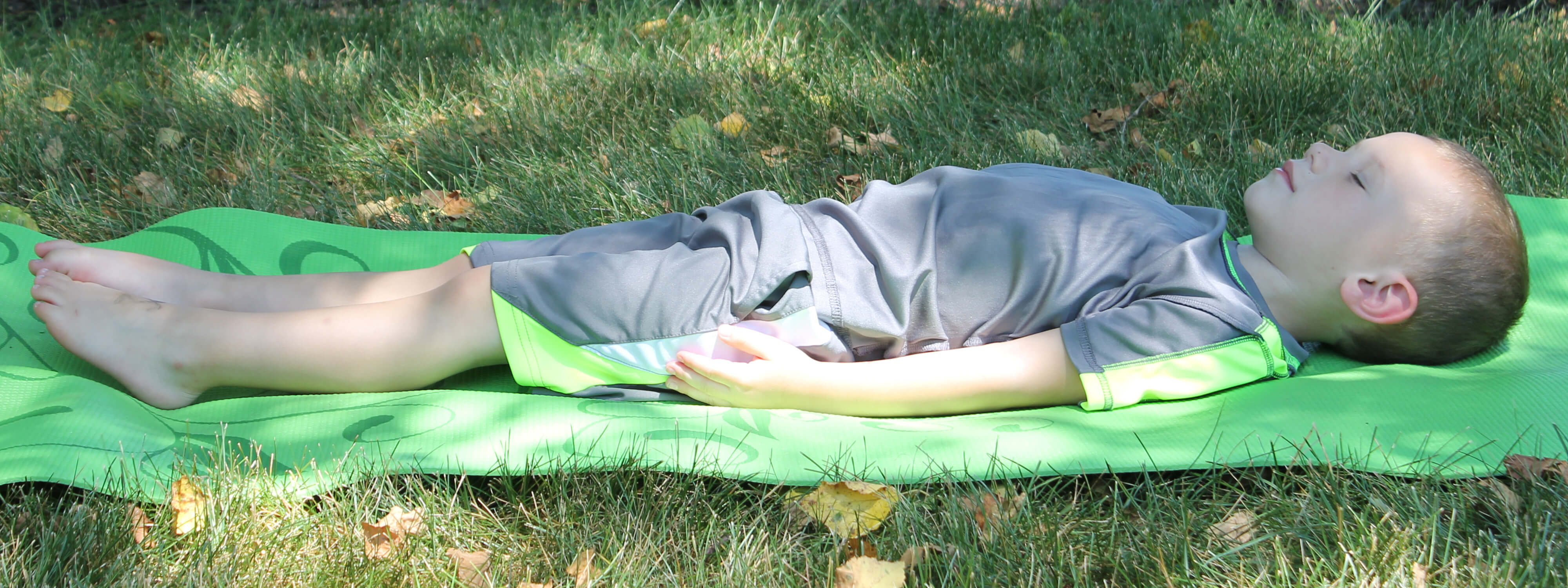
“Miss Sara, I can’t wait to do the “sleeping pose” again.” That is what I hear time and time again at the end of our Kids Yoga Classes.
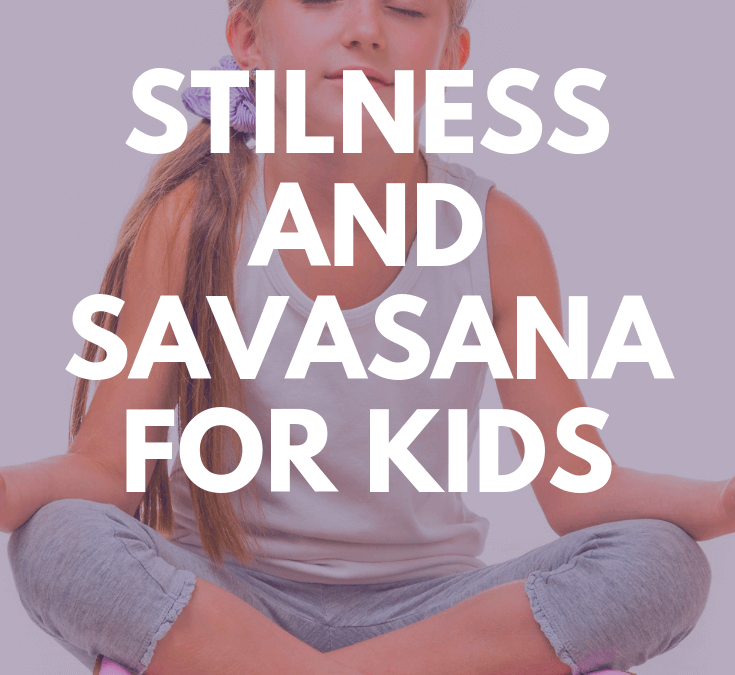
Savasana often becomes the children’s favorite part of yoga class, which I think is incredible since it is the part of the class where they are not doing a thing.
The children begin class so eager, excited, and full of energy. After moving and working their bodies in such good and healthy ways, they are truly ready for rest and relaxation. I tell my students that their bodies deserve this rest and that taking this time helps them repair and build the muscles they just worked.
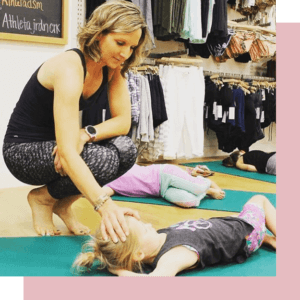
Please do not get the idea that I simply call out, “Everyone get into Savasana,” and that the kids readily roll onto their backs, shut their eyes, as they go into deep stillness. Instead, slowly get kids into Savasana.
Savasana comes at the end of your class after you have practiced breathing exercises, learned yoga poses, played yoga games, practiced balance, built community with one another, and are now ready for a bit of stillness, relaxation, and time for some mindfulness.
Yoga is about movement and poses and postures but it is also about being still and quiet and mindful in savasana. This is such an important skill to learn in our busy lives and especially a wonderful one to model with children
Here are a few ways to help promote stillness and mindfulness with kids.
Change the Mood
I like to begin to speak in quieter tones and if possible turn the lights down lower. It’s also easy to play calming music or nature sounds. This change in their surroundings signals to children that a change is coming. As you build this into the class flow, children begin to recognize the signs and signals leading to Savasana.
Be a Melting Ice Cube
As Savasna follows our Building Community component of class we are already seated in a circle. I like to challenge the kids to lie down as slowly as they can as if they are an ice cube melting into the ground. When they get down to the ground have them stretch out as long as they can with their toes pointed and their arms up overhead. See how long they can get by taking deep breaths.
Squeeze and Relax
While kids are lying down on their yoga mats preparing for savasana, I’ll sometimes have them squeeze a body part as hard as they can. Let’s say they squeeze their hands for a few seconds and then they relax it. Or also squeeze their shoulders up by their ears and then relax it. They’re actually able to physically feel the difference their body makes from holding it so tight and then relaxing.
Use Memorable Phrases
I challenge the children to stretch as “long as a pencil” or have them be “as still as a statue” or “as quiet as a mouse.” This gives the children a mental picture of how to pose and act.
Be Comfortable
I allow the children to lay however they feel comfortable. It could be on their backs, on their stomachs, curled up into a ball, but have a realistic expectation for how long the kids can lie still. 15 to 30 seconds is good for the preschool ages while older children can stay longer. The more they get used to Stillness and Savasana at the end of class, the longer they can stay still.
Bring Them Out Slowly
When it’s time to come out of this relaxation, I like to ask them to roll over on their side and use their arm as a pillow. Then they sit up and you can quietly lead them through a couple of big, deep, cleansing breaths while bringing arms up overhead, breathing in, and breathing out and placing your hands at heart center. We’ll do that a couple of times.
Be Encouraging
I like to give a few positive closing words that unite the class and set their path for the remainder of the day or the week. I also like to thank them for coming to yoga, taking care of their bodies, working together, and having fun.

 and working their bodies in such good and healthy ways, they are truly ready for rest and relaxation. I tell my students that their bodies deserve this rest and that taking this time helps them repair and build the muscles they just worked.
 still and quiet and mindful in savasana. This is such an important skill to learn in our busy lives and especially a wonderful one to model with children