You can do this! I don’t want you to look at this as you should do, but instead, something that you can do! Think of it as Why Kids Need Yoga Now and what you can do to help introduce it to them. The good news is that it is easier to teach yoga to children now more than ever! There is something very satisfying about teaching children and helping to instill lifelong skills and benefits. I promise teaching yoga to children isn’t hard. We have a step by step proven format. It is something that you can do! I am here to help you.
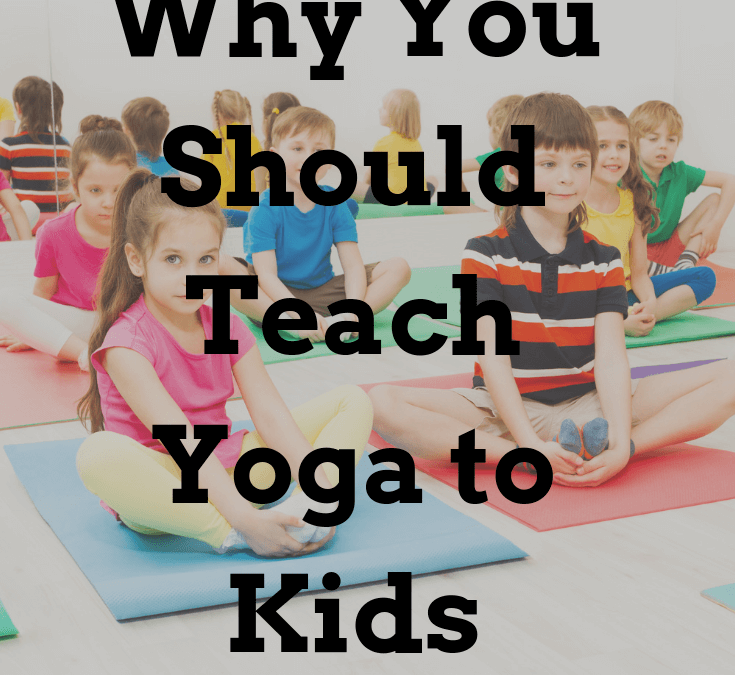
Why You Should Teach Yoga to Kids
# 1. Kids Need Yoga Now
Our world is changing, and our kids face different challenges and commitments then they have in the past. There are many demands on kids’ time and pressure to do well and be successful at what they are involved in. This includes school, family, friends, sports, quickly changing technology, and other interests. That leaves us with kids who have a lot going on as they try to figure out a way to balance it all.
Kids need to learn how to be able to work through these demands in healthy and responsible ways. Yoga is a skill that can benefit all kids no matter what activities they are involved in or what their interests and abilities are. Yoga meets everyone at any stage and provides incredible extrinsic and intrinsic benefits. Discover the Super 7 Benefits of Yoga for Children here.
Kids that practice yoga are getting stronger mentally and physically. They are healthy, strong, and more confident. Not only this, but it can help them in school, in their extracurricular activities and absolutely their day to day lives.
#2 It is Easier to Teach Yoga to Children Now More Than Ever
When I first started teaching yoga to children there were not a lot of resources available about the best ways to teach children yoga. Since children learn and respond differently than adults I knew yoga had to be taught in a different way than an adult class.
I used my background in Early Childhood and my Master’s Degree in Education as I reviewed and researched child development and the best ways that children learn. I had to figure it out and spent hours and hours researching, writing kids yoga lesson plans, trying them out with kids, and modifying to know exactly what works for teaching yoga to children.
I wanted these kids yoga lesson plans and classes to be engaging, beneficial, and memorable for kids.
Go Go Yoga for Kids prides itself on making yoga for children doable and FUN for the kids AND you to teach. I want you to succeed in teaching yoga to children.
I am excited to share 20+ years of teaching kids compiled for you into 6 hours in our online Kids Yoga & Mindfulness Teacher Training. I spent years figuring out what works and what doesn’t work for teaching kids yoga. I researched, tried, and tested during hundreds of kids yoga classes until I figured out what really worked! Stop wasting your time trying to piece random things into something that works.
I want to make this easy for you. I want you to be able to completely go into any kids environment (studios, camps, clubs, classes, at home) and confidently introduce children to yoga. I know you can give those children quality and inspiring classes. It is so exciting and truly makes such a positive difference.
#3 It is About Making a Difference
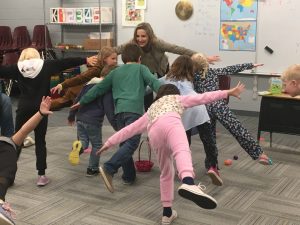
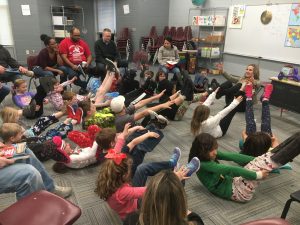
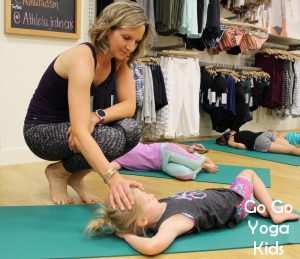
There is nothing like seeing the kids faces full of contentment at the end of Savasana. It is about watching the kids master a pose after working on it for weeks. It is about seeing a child take a few deep breaths before starting a test or before a soccer game. These kids are in tune with what their bodies need and that is so important. It is all about giving children the tools that they will have for life.
Our online Kids Yoga & Mindfulness Teacher Trainingwill help with this. You can make a difference. I will show you exactly how to do this every step of the way.
Get ready for the holidays with these quick, fun and easy winter yoga poses you can do with your kids this season. Learn how to practice your Winter Breath during our breathwork exercises. Then go sledding, bake gingerbread cookies. decorate the tree, be like Santa and his reindeer, and finally become a melting icicle. All of this with yoga poses! Definitely lots of fun for kids of all ages.
Are you ready to learn how to teach yoga and mindfulness to children?
You are in the right place. Kids yoga lesson planning is my jam. After nearly 20 years of classroom teaching experience and preparing over a thousand kids yoga classes, I know a thing or two about creating engaging and effective lesson plans. Having a plan in place will help your class run seamlessly with a flow and a purpose.
I used to spend hours planning just one kids yoga class before I felt ready to teach it. For those of you who love going to adult yoga classes, you may be wondering, how hard can it be to plan a kids class? It seems like it should be easy enough. Teach the kids some poses, flow them together, and then everyone ends up on their backs in a peaceful bliss known as Savasana. That’s all you need to know, right?
Wrong. Well, not entirely wrong. Kids yoga and adult yoga are similar in that they both include breathing, practicing poses, and end with relaxation, but that is where the similarities stop.
Kids yoga is busy. We are moving, breathing, and interacting with one another pretty much the entire time. That’s why it would take me hours to plan a single kids yoga class. First, I needed an age-appropriate theme, creative breathing exercises (to make breathwork NOT boring), movement, games, challenges, and relevant mindfulness exercises. That was just the beginning!
Don’t forget that you also have to keep everyone engaged, on task, and having fun while practicing yoga and mindfulness. This was never an easy task.
I have cracked the code on the exact proven method of how to effectively teach yoga to children. With this step-by-step guide in place, your kids yoga classes will be fun, engaging, memorable, and effective.
And you can begin lesson-planning right from the comfort of lotus position, downward-facing dog, or your couch because it’s all online.
I understand. I am right with you! You love yoga. You enjoy kids. What could be so different about teaching yoga to children compared to taking or leading an adult yoga class? There are definitely similarities between the two with breathing exercises, poses and ending with rest and relaxation, but that is where similarities end. Kids yoga is busy. We are moving, breathing, and interacting with one another pretty much the entire time.
Read on for three important things to keep in mind while introducing yoga to children.
Here are just a few secrets about teaching yoga to children:
Kids Yoga is Not Adult Yoga
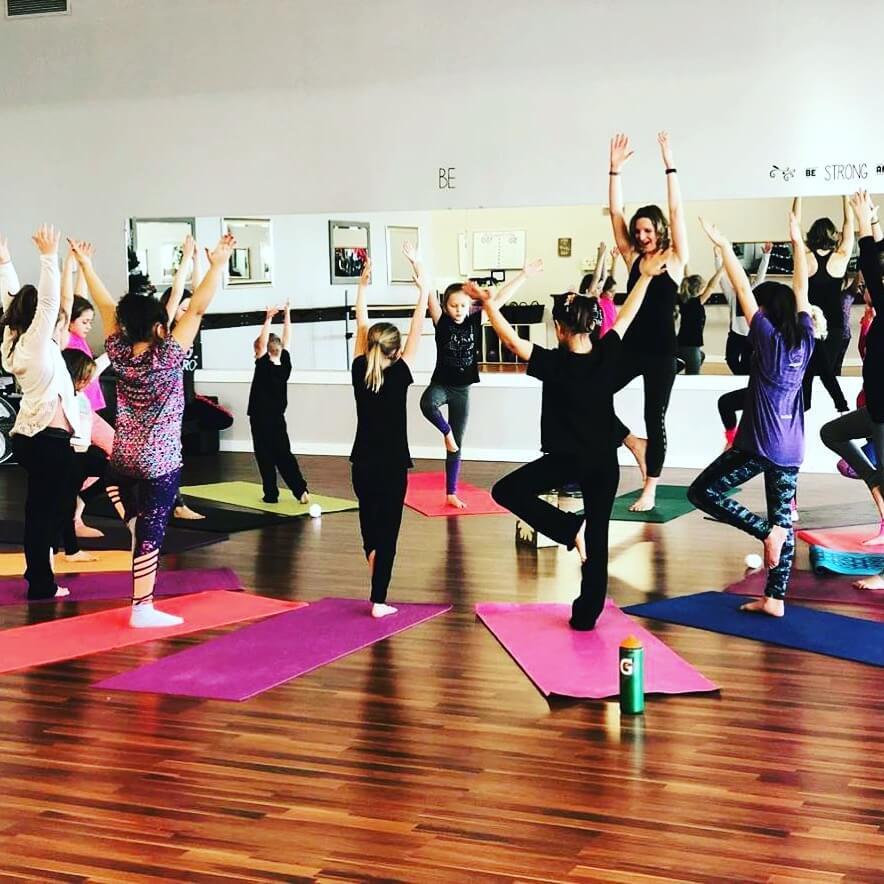
Kids are obviously not adults, and they will not behave like adults. As obvious as this may seem, I really want you to understand. Kids are not going to follow every pose in a structured Vinyasa flow type adult class. Kids are busy, spontaneous, and they love engaging with one another. My kids yoga lesson plans always contain 9 proven and important components. That may seem like a lot, but this keeps the kids active, engaged, learning, and in the moment.
Ease Up on the Alignment
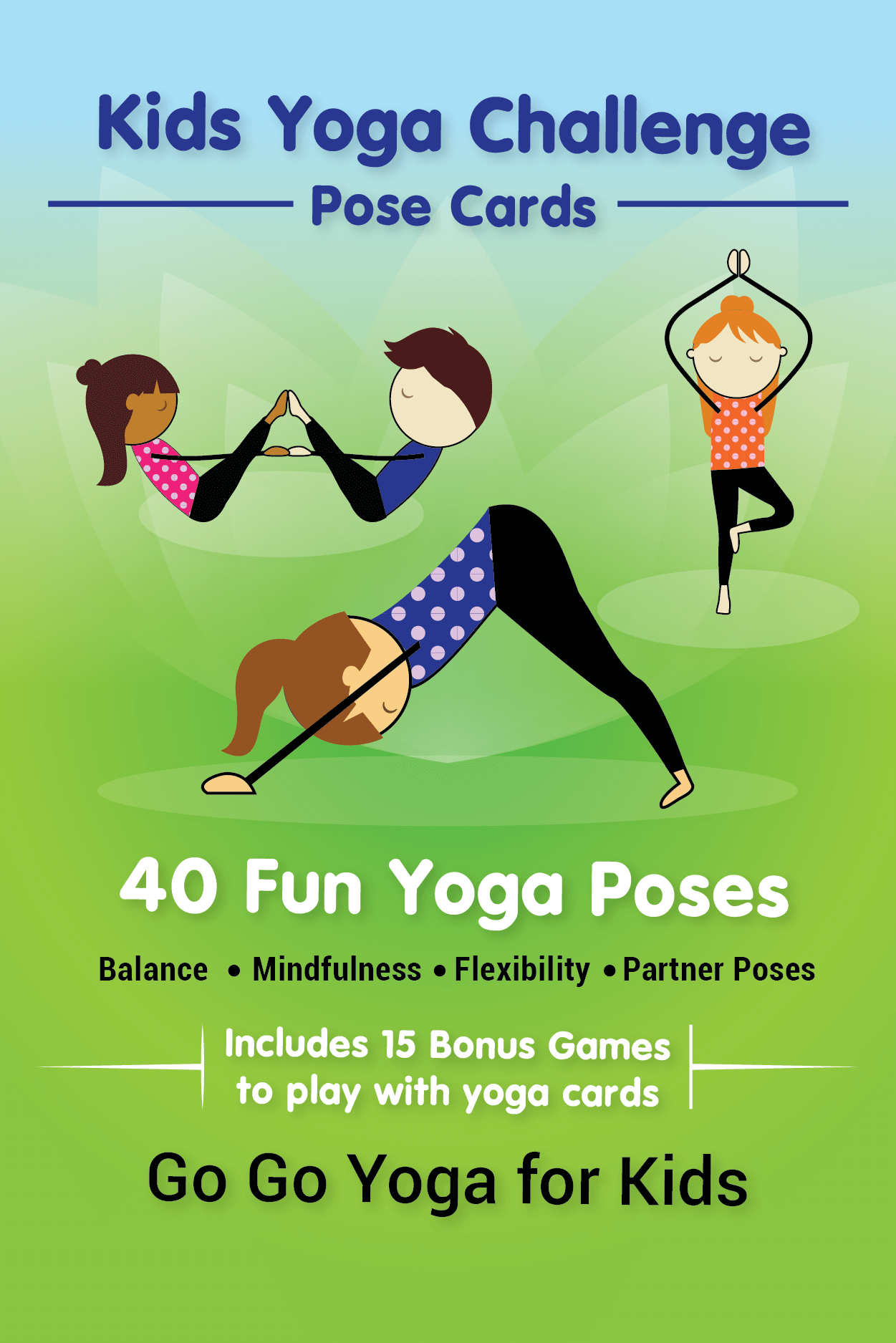
Don’t take this the wrong way. Above all, be safe but not picky. Demonstrate the pose yourself or with yoga pose cards. But be aware that if you spend a majority of time making sure Venya has a complete 90 degrees with their leg in Warrior 1 or that Dylan’s Plank Pose includes a perfectly flat back, you will lose the attention and enthusiasm of the kids. Yoga is a continued practice. Children, like adults, will continue to learn and grow with the poses and their practice.
Yoga is a Life-Long Journey
There is a reason that yoga is referred to as a practice. There is no such thing as perfection in yoga. By introducing yoga to children you are helping to give them the skills they will have for life.
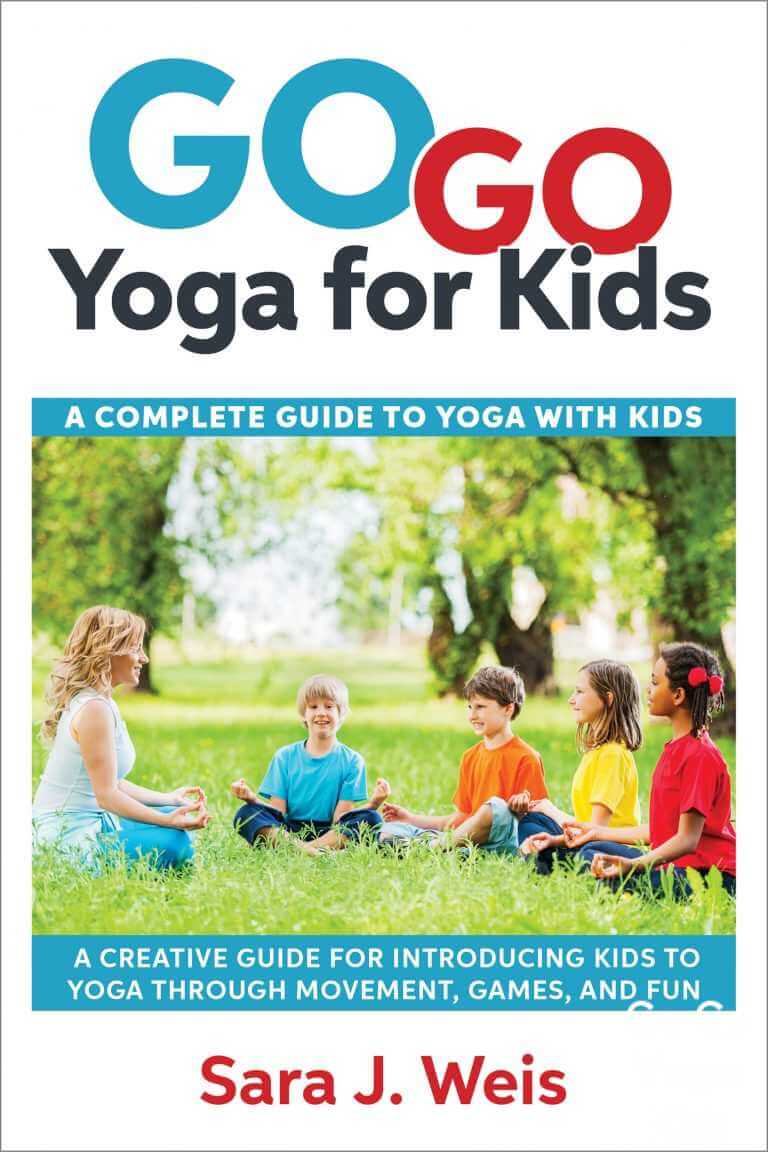
I know you can do this. Are you wondering how you can even begin? If you are ready to dip your toes into learning about how to teach yoga to children, then I recommend Go Go Yoga for Kids: A Complete Guide to Yoga with Children. This book covers in great detail about the important 9 components of a successful kids yoga class. It will completely prepare you to teach successful and memorable kids yoga classes.
If you are ready to dive in deeper with your learning, our online Kids Yoga and Mindfulness Teacher Trainingis the perfect place to find out everything you need to know about teaching yoga and mindfulness to children complete with teaching videos, guides, class management, lesson plans, yoga pose cards and much more. Learn more here.
Are you looking for a fun easy kids yoga game?! Yoga Shapes is easy to play and the kids LOVE it! All you need is a dry erase marker and a markerboard.
How to Play Yoga Shapes:
Begin by telling the children that they will need to make the shape with their own body on markerboard as quickly and quietly as possible. There is no right or wrong answer.
Draw one shape on the markerboard. When I turn the markerboard around the children will see a shape (examples: 0 , 1, L, S) Keep it simple at first. After the children make the shape with their body, then I erase it and draw another.
After a few rounds, then have the students pair up and make shapes such as T, and V. Remind them to do this quickly and without talking. It is amazing to see the pairs make the shapes differently. Finally, if you are up for a big challenge, have all of the students work together to make the final shape. I have done a smiley face, star or Y for yoga. This is a great team effort and because they aren’t able to talk it is neat to see the nonverbal communication.
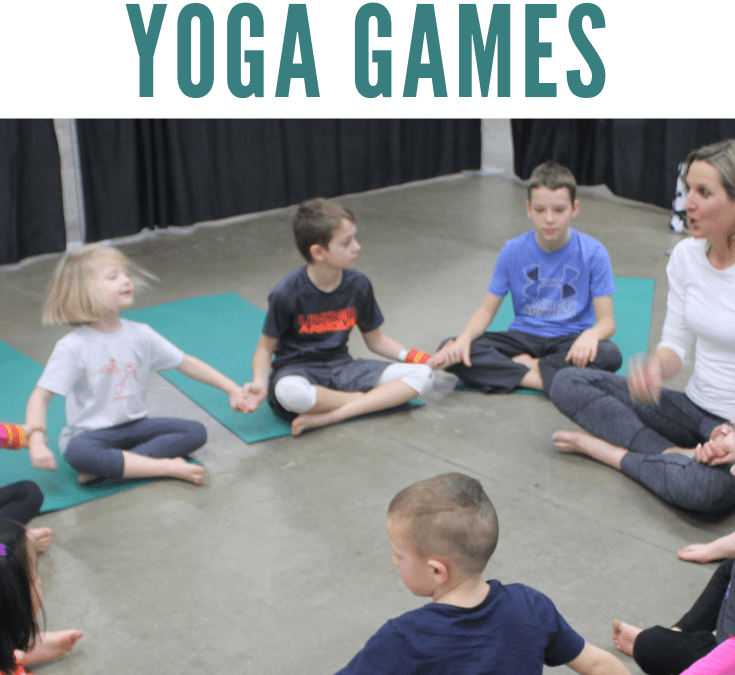
Let’s get started with yoga games! I’m going to tell you about the Top 10 Yoga Games and we’ll also learn why games are important with kids yoga.
Kids remember the poses when they play games with them. They are also a great way to practice the poses with games. Kids love games. They’re a great way to get kids moving, practice poses, and working together. I also love taking my favorite familiar childhood games and turning them into yoga games for kids. Some of these games need materials but the majority do not.
Top 10 Yoga Games for Kids:
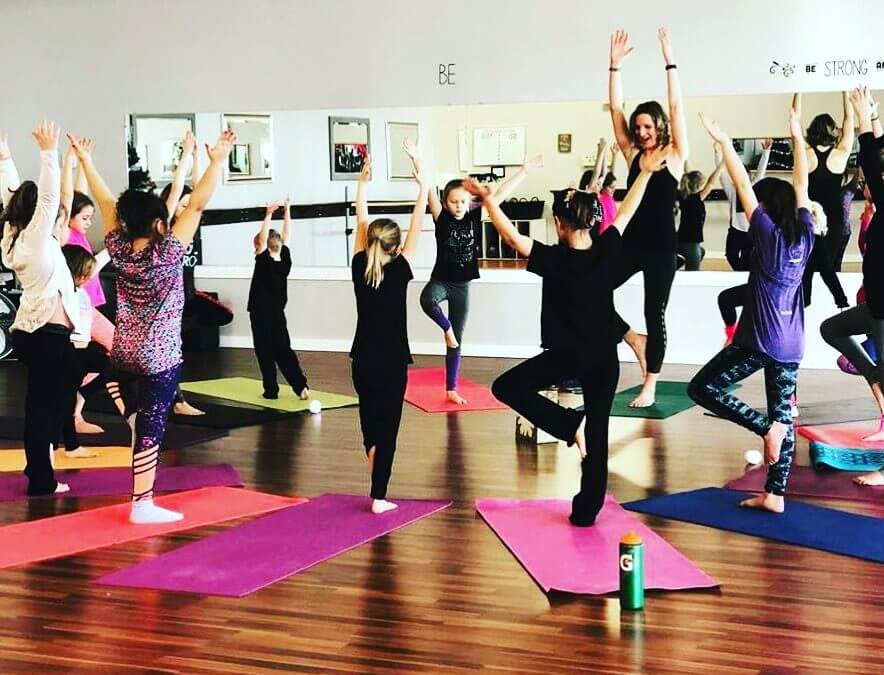
First is Yogi Says which is similar to Simon Says where you will have a leader. The leader will say different things such as “Yogi Says hop on one foot,” “Yogi Says jump up and down,” “Yogi Says do Tree Pose.” You can incorporate action movements as well as yoga poses.
2. Next, you can turn on some music with freeze dance. When you stop the music everyone can hold a favorite pose the best they can.
3. For Animal Pick you can fill a bag with all stuffed animals or toys and kids can take turns drawing out an animal and thinking about what yoga pose the animal might do. For example, a stuffed dog could be down dog.
4. A few more yoga games is Yoga Stories. I’ve got a lot of good books that I recommend with this. Any story that includes animals in it. You can pause as you’re reading the story and see if kids can come up with a yoga pose for the animal.
5. Musical mats is just like musical chairs. It’s another fun yoga game. Put your mats in a circle and turn on some music. When the music stops make a yoga pose right there on the mat hold it.
6. The Yoga Obstacle course is another favorite of kids. You can use anything – couch cushions, hula hoops, jump ropes. Place them all in a circular formation along with some yoga pose cards or different poses that kids can do. Then the kids can move around the room with the obstacle course, also stopping at variable points and holding their yoga pose.
7. Yoga Shapes is also a favorite one. You can write a shape down, like a triangle or square, on a piece of paper and kids can try to make that with their body.
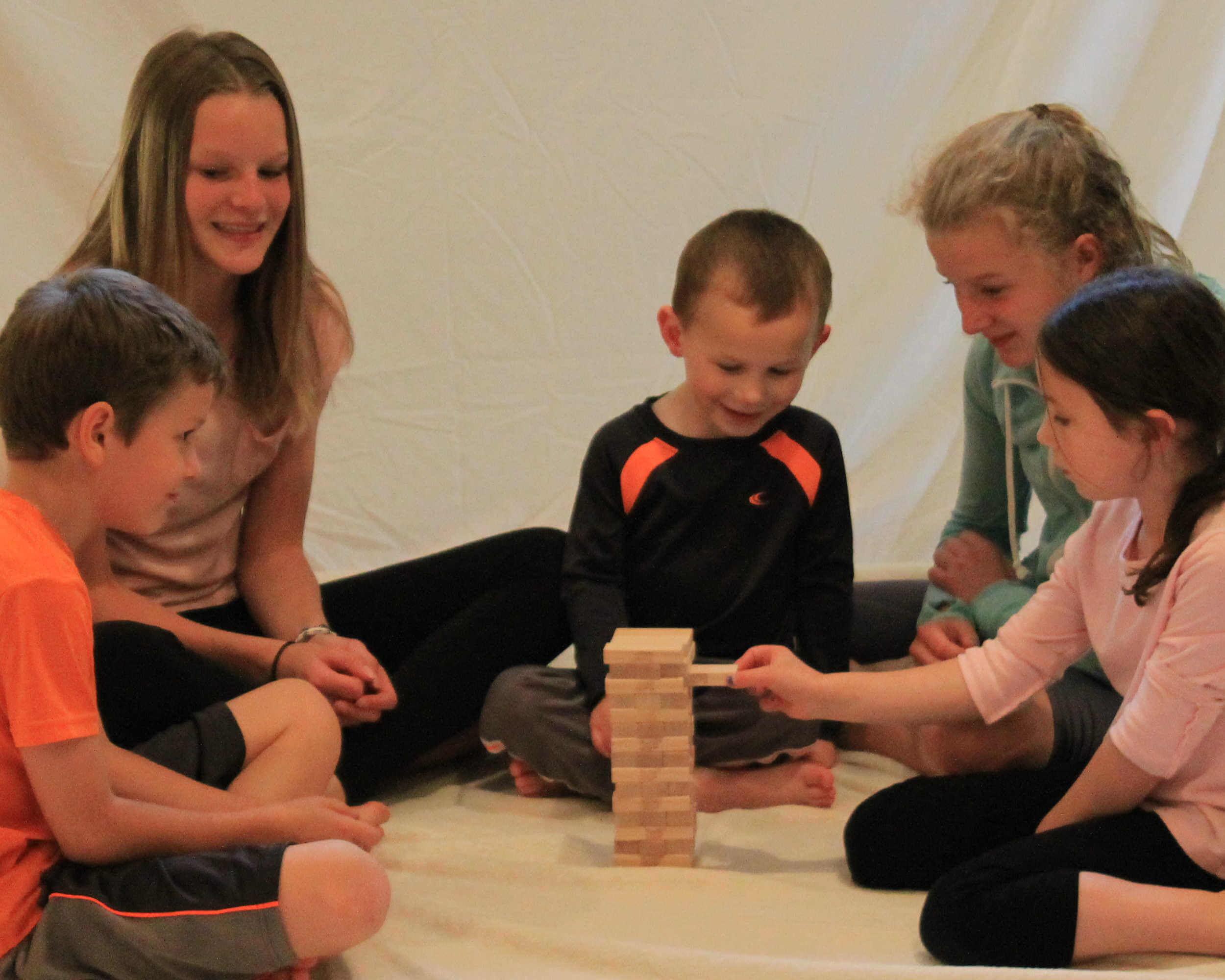
8. Yoga Jenga I created by just taking the familiar Jenga game and writing down names of poses on the blocks. You play with normal Jenga rules with pulling out the blocks and learning each pose as you pull it out and then placing it on top.
9. Yoga Says is also fun for the kids. Have them pick 3 to 4 poses that they’ve learned and they are center stage and their job with the yoga show is to show the poses and kind of transition in between them so that it flows pretty seamlessly.
10. Another great game for younger ages is Follow the Leader where you can lead or the kids can take turns leading movements and yoga poses and everyone does what the leader is doing.
 well and be successful at what they are involved in. This includes school, family, friends, sports, quickly changing technology, and other interests. That leaves us with kids who have a lot going on as they try to figure out a way to balance it all.
 child development and the best ways that children learn. I had to figure it out and spent hours and hours researching, writing kids yoga lesson plans, trying them out with kids, and modifying to know exactly what works for teaching yoga to children.
 vasana. It is about watching the kids master a pose after working on it for weeks. It is about seeing a child take a few deep breaths before starting a test or before a soccer game. These kids are in tune with what their bodies need and that is so important. It is all about giving children the tools that they will have for life.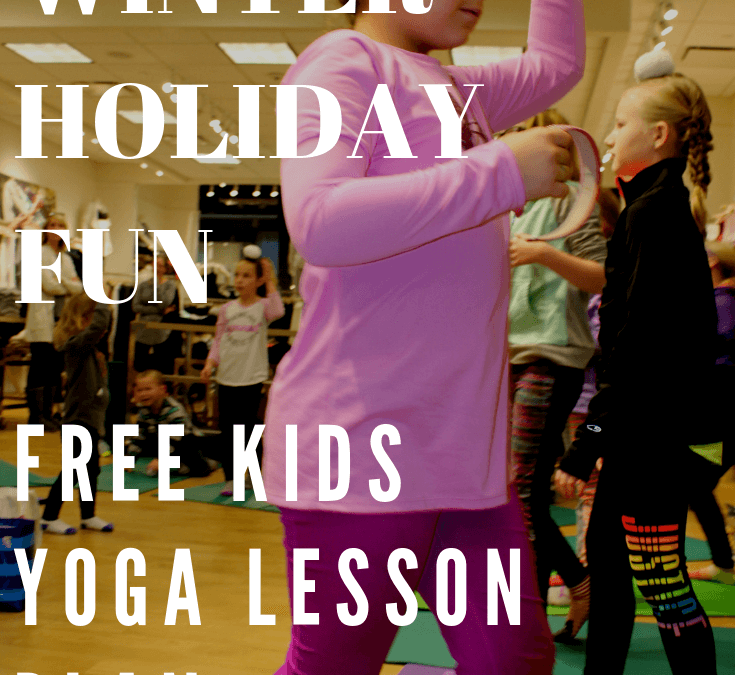
 it. For those of you who love going to adult yoga classes, you may be wondering, how hard can it be to plan a kids class? It seems like it should be easy enough. Teach the kids some poses, flow them together, and then everyone ends up on their backs in a peaceful bliss known as Savasana. That’s all you need to know, right?
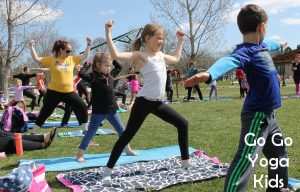 Kids yoga is busy. We are moving, breathing, and interacting with one another pretty much the entire time. That’s why it would take me hours to plan a single kids yoga class. First, I needed an age-appropriate theme, creative breathing exercises (to make breathwork NOT boring), movement, games, challenges, and relevant mindfulness exercises. That was just the beginning!
 d the code on the exact proven method of how to effectively teach yoga to children. With this step-by-step guide in place, your kids yoga classes will be fun, engaging, memorable, and effective.