You can do this! I don’t want you to look at this as you should do, but instead, something that you can do! Think of it as Why Kids Need Yoga Now and what you can do to help introduce it to them. The good news is that it is easier to teach yoga to children now more than ever! There is something very satisfying about teaching children and helping to instill lifelong skills and benefits. I promise teaching yoga to children isn’t hard. We have a step by step proven format. It is something that you can do! I am here to help you.
Why You Should Teach Yoga to Kids
# 1. Kids Need Yoga Now
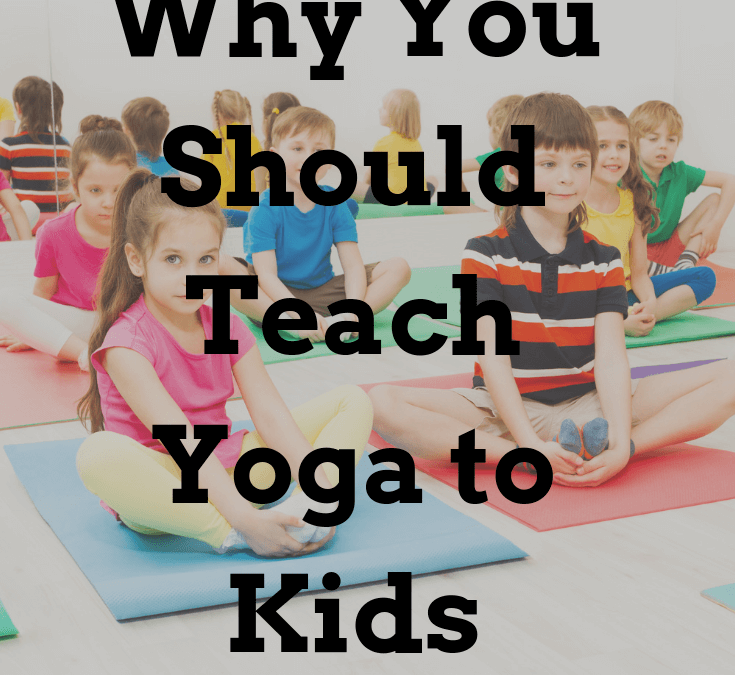
Our world is changing, and our kids face different challenges and commitments then they have in the past. There are many demands on kids’ time and pressure to do well and be successful at what they are involved in. This includes school, family, friends, sports, quickly changing technology, and other interests. That leaves us with kids who have a lot going on as they try to figure out a way to balance it all.
Kids need to learn how to be able to work through these demands in healthy and responsible ways. Yoga is a skill that can benefit all kids no matter what activities they are involved in or what their interests and abilities are. Yoga meets everyone at any stage and provides incredible extrinsic and intrinsic benefits. Discover the Super 7 Benefits of Yoga for Children here.
Kids that practice yoga are getting stronger mentally and physically. They are healthy, strong, and more confident. Not only this, but it can help them in school, in their extracurricular activities and absolutely their day to day lives.
#2 It is Easier to Teach Yoga to Children Now More Than Ever
When I first started teaching yoga to children there were not a lot of resources available about the best ways to teach children yoga. Since children learn and respond differently than adults I knew yoga had to be taught in a different way than an adult class.
I used my background in Early Childhood and my Master’s Degree in Education as I reviewed and researched child development and the best ways that children learn. I had to figure it out and spent hours and hours researching, writing kids yoga lesson plans, trying them out with kids, and modifying to know exactly what works for teaching yoga to children.
I wanted these kids yoga lesson plans and classes to be engaging, beneficial, and memorable for kids.
Go Go Yoga for Kids prides itself on making yoga for children doable and FUN for the kids AND you to teach. I want you to succeed in teaching yoga to children.
I am excited to share 20+ years of teaching kids compiled for you into 6 hours in our online Kids Yoga & Mindfulness Teacher Training. I spent years figuring out what works and what doesn’t work for teaching kids yoga. I researched, tried, and tested during hundreds of kids yoga classes until I figured out what really worked! Stop wasting your time trying to piece random things into something that works.
I want to make this easy for you. I want you to be able to completely go into any kids environment (studios, camps, clubs, classes, at home) and confidently introduce children to yoga. I know you can give those children quality and inspiring classes. It is so exciting and truly makes such a positive difference.
#3 It is About Making a Difference
There is nothing like seeing the kids faces full of contentment at the end of Savasana. It is about watching the kids master a pose after working on it for weeks. It is about seeing a child take a few deep breaths before starting a test or before a soccer game. These kids are in tune with what their bodies need and that is so important. It is all about giving children the tools that they will have for life.
Our online Kids Yoga & Mindfulness Teacher Trainingwill help with this. You can make a difference. I will show you exactly how to do this every step of the way.
“She is constantly disrupting the flow of the class.”
These are just a few of the statements that I hear from many of you time and time again. I hear you! I understand. Teaching children is all about how to keep kids interested, engaged, challenged, and motivated. This means they are not acting up and spoiling it for the other kids. I get that. I have been there!
After 20 years of teaching in the school classroom and leading thousands of kids yoga classes, I have a pretty good idea what works for keeping your class running seamlessly.
How to Keep Children Engaged in Yoga Class
Keep the Energy Level Varied
When I teach yoga to children, my lesson plans include activities for varied energy levels. That is a good thing! I promise! I like to begin my classes at a low energy level which means settling into class, focusing on our breath and being calm and mindful.
Next, I move into the next parts of my kids yoga lesson plans which include Active Movement, Themed Yoga Poses, Yoga Games, and Yoga Challenge which require a mid- to high-energy level. Finally, I like to bring the level back down with our Community Building, Mindfulness, Savasana. Kids do really well with this type of pacing in a yoga class and this helps quite a bit with any classroom management issues. If you want to know more about the exact breakdown of my Kids Yoga Lesson Plan, our bestselling Go Go Yoga for Kids: A Complete Guide to Yoga with Kidstakes you through the exact step by step lesson planning breakdown and no-fail formula.
Keep Things Moving
I cannot stress this one enough. There is a reason that there are 9 components in the Go Go Yoga for Kids yoga class plan. That may seem like a lot, but each component only lasts a few minutes each. Each part is done specifically with a purpose. It begins with welcoming the children to class, introducing the themed yoga poses, and community building. Each part is important to the overall structure and flow of class and this definitely helps engage students. Plus familiarity and routine help build confidence with kids. That is what we want…confident kids!
Continue moving forward. I know class management can be the number one challenge in working with kids, but always continue learning and revamping. By having a plan in the place will help you stay on track, but remember to be in the moment and have fun with the kids as well. Stick with it. Keep coming back and learning and growing. Just think of the difference you are making in the lives of the children you know and love.
Too much is not always a good thing. I was definitely guilty of this very easy to do mistake when I first started teaching yoga to children. Over the years I have learned from my experiences and grown in confidence from teaching in my school classroom and by leading my kids yoga classes. What I learned is something that you need to be aware of when teaching children. Read on to discover new yoga teacher tips how they can make a difference in your classes.
Pretend you are leading a kids yoga class with school-aged children. You and the kids are having the time of your life playing Musical Mats (similar to Musical Chairs, but with yoga mats). It is the most fun they ever had! They are dancing to the music as they move in a circle around the yoga mats. You hit pause on the song and “oh the fun” as everyone scrambles to find a mat and make a yoga pose. The kids are all smiling and holding their favorite yoga pose and you are thinking, “Oh yes! Teaching yoga to children is so easy. So much fun! Let’s play this game again. And again. And again.”
I know I am guilty of this in my early years of teaching yoga to children. It is so common when people find something that works so well that want to use that game, exercise, or strategy again and again.
Be aware, however, that playing a game for too long is going to lead to children that act out or “don’t want to play any longer.” That is because the game was overused and overplayed. The recommended Go Go Yoga for Kids amount of time for playing a game is 7-10 minutes. Maximum. Keep things light and keep things fresh.
If everyone is smiling and having fun when you end the game then that is perfect! If they are asking to play “just one more time” then that is great! Still end the game. My rule of thumb is to always end the game or activity on a high note. That is a sure fire way to ensure that everyone wants to play that game the next time it is announced.
Try this strategy of “ending on a high note” and see the difference it makes with your kids yoga classes.
By the way, if you are looking for games that are definite winners, then check out the Go Go Yoga for Kids books and resources. These include over 500 kid tested and approved yoga games, activities and kids yoga teacher tips.
Have you ever had that “a-ha” moment where you look back and can recognize a learning opportunity or pivotal moment?
I don’t mean to make this sound like a lightning strike or mountain moment where everything was crystal clear and an obvious path was laid before you. I mean looking back, reflecting, and understanding something in a different way.
The Power of Reflection
I enjoy looking back on what has happened, accomplished, or stories I want to remember. For example, twice a year I take a moment and journal in each of my kids’ memory books about things that happened and that are important or memorable for each of them. I also have a family “year in review” journal that I jot down family memories and accomplishments at the end of each year. Every December when I pull out those journals my children always want to hear what I wrote and it brings back memories that they may have forgotten.
It is important to look back and think about what has changed, what you have made progress in or pivoted in completely and what you have learned.
A Teaching Reminder
As I was reflecting on my early years teaching yoga to children, I remembered one turning point that changed exactly how I carried out my kids’ yoga classes.
You see, I got a little caught up in the “how” instead of the “why.”
I knew how to teach yoga for kids, but why was I doing it?
I had spent hours creating these memorable and teachable lesson plans that I just couldn’t wait to try out with my students. I was so excited to see my lesson plans put into motion and envisioned kids laughing, playing, and being engaged throughout. More times than not, that was the case, and I felt like I had it all mastered.
Then there was one particular class about three months into my teaching kids yoga career when I noticed something was off with my class. We were zipping along and practicing the learned yoga poses, but I felt removed and the students were unconnected. There was no synergy. No engagement. Kids were doing what I asked of them, but it all felt blah and lackluster.
Teaching Is More Than A Lesson Plan
I realized then and there that I could create the most amazing lesson plans and power through it all so that everything was “covered” or “mastered,” but if the kids aren’t feeling known, connected, and cared about then what did it really matter? The whole lesson plan would be completed, but it would feel flat and unmemorable.
First Build a Connection With Your Students
It is so very important to take the time to build that connection with your students and for them to engage with one another.
Since that class, I have made time for The Welcome at each start of class. Every child gets a chance to share and be known. It takes only moments, but what a difference it makes in setting the tone for your class. They are involved and invested. You have shown that you care about them as a person and want them to succeed.
I carry this out in my classroom teaching as well. I can have the most amazing lesson plans for my fourth graders on how to write a biography, but if they don’t feel safe, cared for and heard above all, it will not even matter.
Want to know more about how to effectively engage your students from the start? See my tips here for the most important part of how to teach yoga for kids
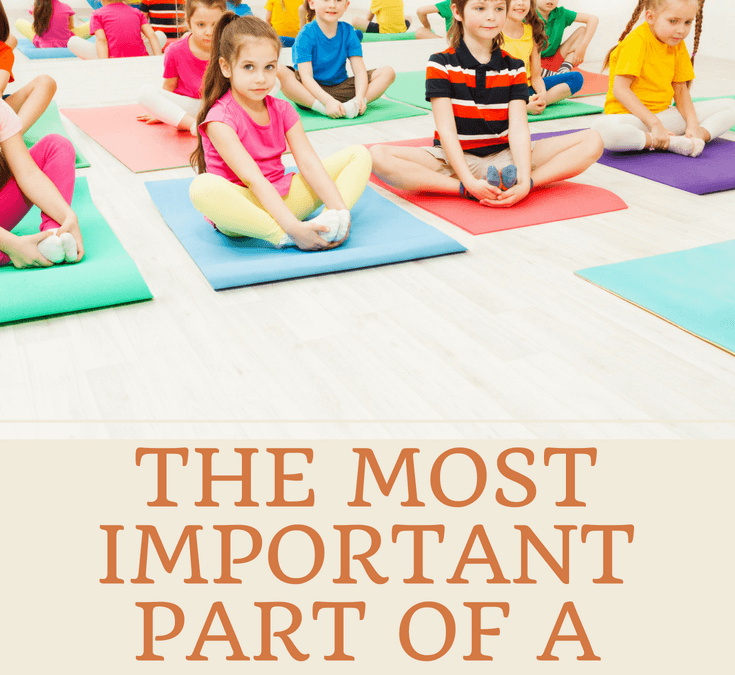
There are many important components to a successful and memorable kids yoga class, but can you guess what the most important part is? This only takes a couple of minutes and is found right at the beginning of your kids yoga class. It is The Welcome! While all parts are important in their own way, The Welcome is the very first part of your class and is the first real class interaction you will have together. The Welcome helps set the tone for how your class will go and helps explain to your students what they will be doing and learning as well as what you expect of them.
When you establish and make a connection with your students right from the start, it makes such a difference throughout your class as you introduce and teach breathing exercises, yoga poses, games, challenges, relaxation, and more.
I think about this in my school classroom as well. Children need to know that they are safe and cared for. When you have a connection and a trust established, then you can truly teach the content.
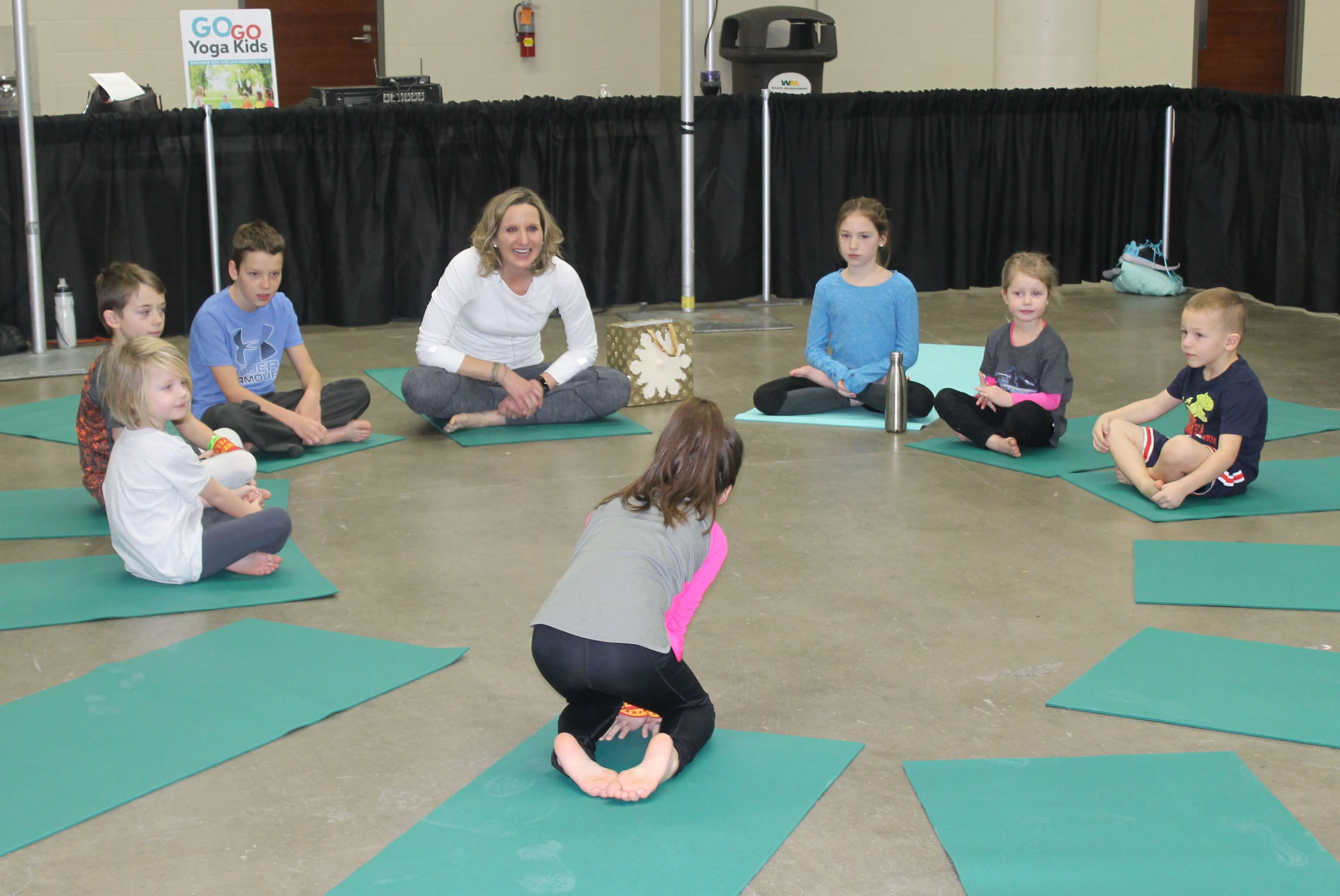
In the beginning of my kids yoga class, I like to gather the students in a circle and welcome them warmly while having them introduce themselves. This will help you get an overall sense of their mood and abilities from the start. It is also the ideal time to reinforce their names with their faces which comes in handy with the management of the class.
I like to have my students share their name and answer a question.
For example:
Sharing something that they are good at
What do you already know about yoga?
Share why yoga is good for you
Demonstrate any yoga poses that they already know
Ask a theme related question such as “Which superhero would you be and why?”
I also like to briefly go over my 3 No-Fail Rules at this time. You only need these three rules to keep your class running seamlessly which is a big deal for the success and involvement of your classes.
If you are ready to dive in deeper with this, I cover the 3 No-Fail Rules and other important class management strategies in our online Kids Yoga and Mindfulness Teacher Trainingas well as our Teacher Training Workshops that are included with this master course. Ths master course guarantees to give you the confidence and resources to truly make a difference with the children that you love and care about.
Remember, you only get one chance to make that first impression. The Welcome does not need to be long, but it is the best opportunity to let kids know how excited you are that they are there and to introduce them to the theme and format for the class.

 well and be successful at what they are involved in. This includes school, family, friends, sports, quickly changing technology, and other interests. That leaves us with kids who have a lot going on as they try to figure out a way to balance it all.
 child development and the best ways that children learn. I had to figure it out and spent hours and hours researching, writing kids yoga lesson plans, trying them out with kids, and modifying to know exactly what works for teaching yoga to children.
 vasana. It is about watching the kids master a pose after working on it for weeks. It is about seeing a child take a few deep breaths before starting a test or before a soccer game. These kids are in tune with what their bodies need and that is so important. It is all about giving children the tools that they will have for life.